
Victor Vasarely
Boccara artwork selection by Didier Marien
Works by Victor Vasarely in the Boccara Collection
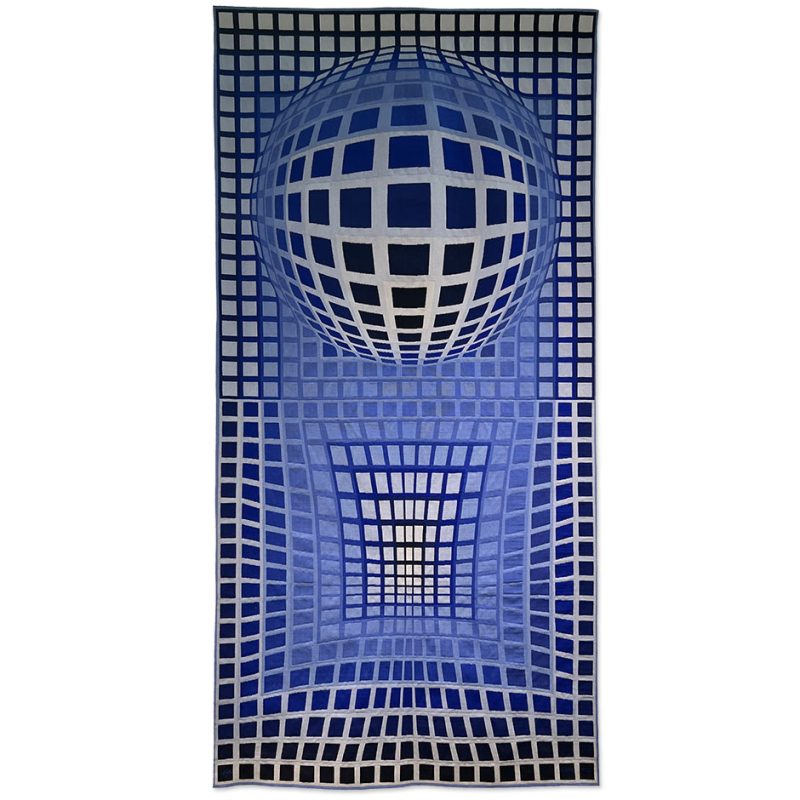
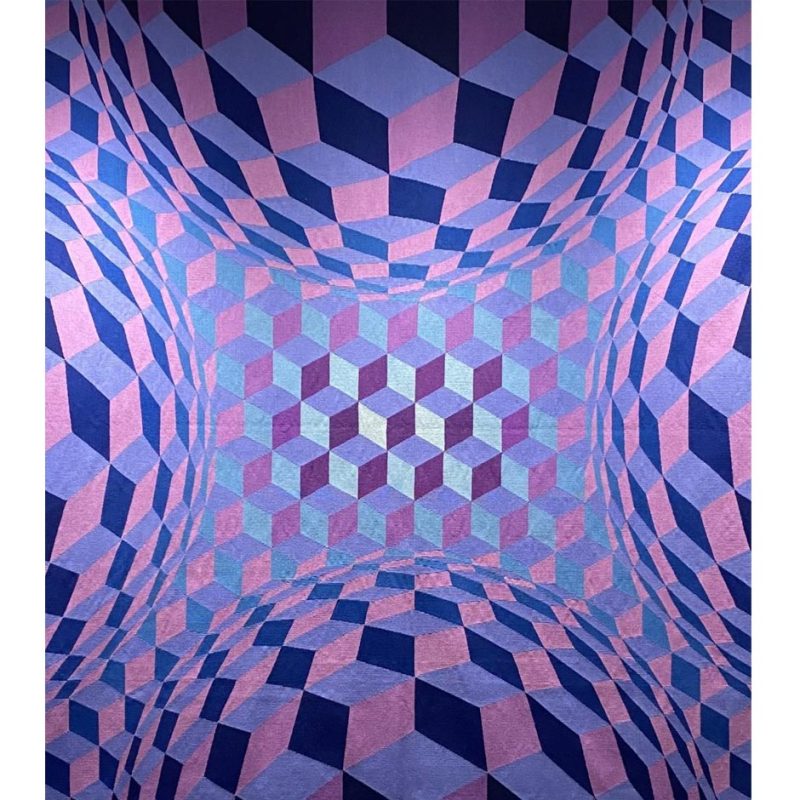
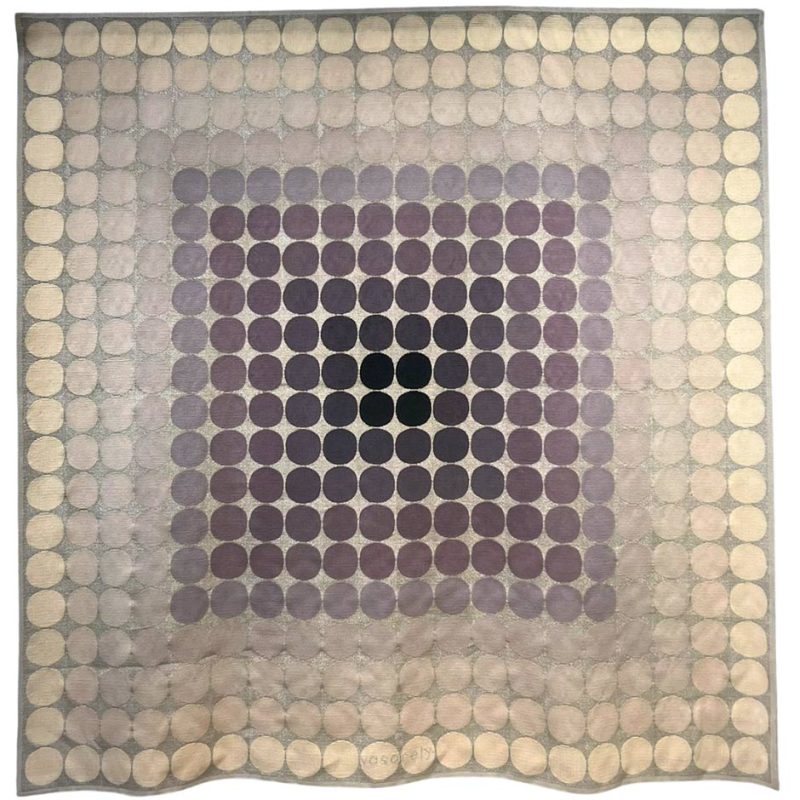

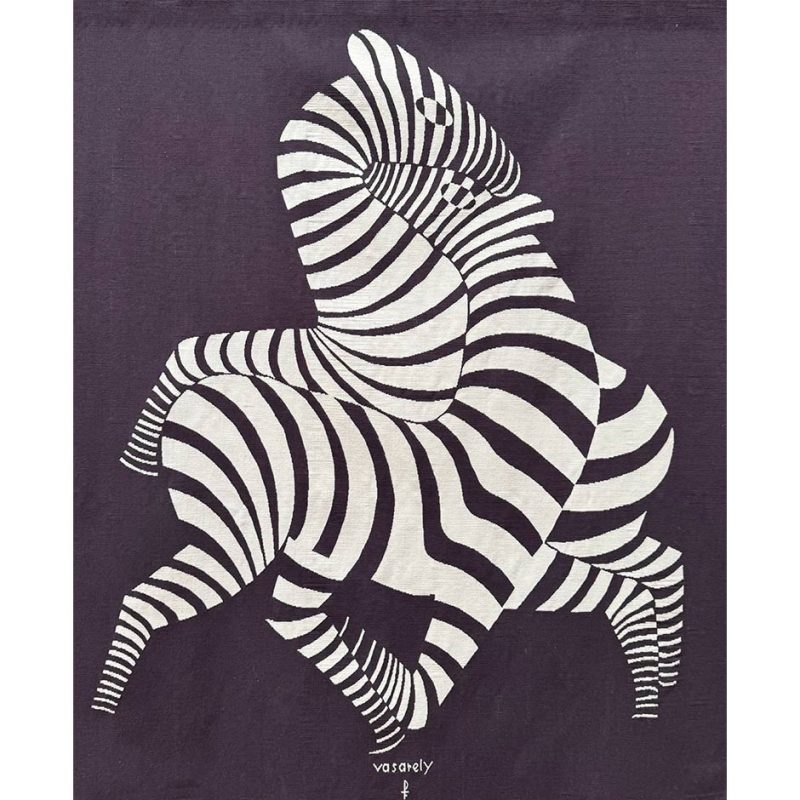
ORIGINS & VISION
About the Artist
From the Mühely to the Parisian Avant-Garde
Victor Vasarely’s journey began in Budapest at the Mühely, a progressive institution often dubbed the “Bauhaus of Hungary.” It was here that he developed his foundational understanding of geometry, psychology, and visual structure. Upon settling in Paris in 1930, he moved away from graphic design and toward a lifelong pursuit of what he called “cinétisme”—the creation of movement through optical illusion. Vasarely was convinced that art should not be a solitary experience for the elite but a democratized language integrated into the fabric of everyday life. This conviction led him to develop a systematic method of composition where precise combinations of tonal gradations and geometric shapes generated three-dimensional space out of a flat surface.
The Plastic Alphabet: A Modular Language
At the heart of Vasarely’s innovation was the “Plastic Alphabet,” a modular system of geometric units that he used to construct his visual universes. This system allowed for endless permutations, where circles, squares, and rhombs interacted to create vibrations and spatial expansions. By treating form and color as inseparable elements, he was able to signify the complexity of the world through a visually intelligent and accessible code. His influence soon moved beyond the frame, informing the broader fields of architecture, design, and urban planning during the post-war era.
The Weave of Reinterpretation: Tabard and Pinton
In 1951, a serendipitous meeting with François Tabard, the head of a premier Aubusson workshop, opened a new chapter in Vasarely’s career. Unlike many artists who viewed tapestry as a simple reproduction of a painting, Vasarely saw it as a reinterpretation. Working closely with the Tabard and Pinton ateliers until 1976, he translated his chromatic grids and optical patterns into woven surfaces of exceptional precision. In the medium of wool, his “plastic alphabet” found a unique physical resonance; the subtle shifts in fiber texture and thread density intensified the sensation of curvature and depth, pushing the technical limits of the loom to achieve a luminous, vibrating effect.
A Legacy of Democratized Vision
Vasarely’s tapestries were produced in various formats, ranging from intimate domestic pieces to monumental works designed for public institutions. This variety reflected his desire to place art at the center of the human experience, a mission that was solidified with the establishment of the Victor Vasarely Foundation in 1976. Today, his woven masterpieces are held in museums worldwide, serving as a lasting testament to his vision of a visually intelligent world. Through the stewardship of Didier Marien and the Boccara Gallery, these works remain at the forefront of contemporary appreciation, inviting viewers to experience the profound harmony of optical abstraction and master-level textile craftsmanship.